
On Long Island, the storm that floods your house often isn't the one with a famous name. It's a nor'easter that sits offshore for a day or two, pushing ocean water into the bays while the rain keeps falling. The water can't drain out between tides, so each high tide comes in higher than the last. If you live near the water on the South Shore, or anywhere with a basement that takes on water, here's how to get ready, how to stay safe when the water comes in, and what has to happen after it goes down.
Why nor'easters flood Long Island homes
Nor'easters are most common from fall through early spring. Strong northeast winds push ocean water through the inlets into the South Shore bays. When that surge lines up with a high tide, especially around a full or new moon, bay water spills into low streets, yards and basements. Long Beach, Island Park, Oceanside, Baldwin, Freeport, Merrick, Massapequa, Lindenhurst, Babylon and Mastic Beach all have neighborhoods that see this kind of tidal flooding. North Shore harbor areas can flood too in a strong storm.
Inland homes aren't safe just because they're far from the beach. A long, heavy rain overwhelms storm drains, raises the groundwater and sends water through foundation cracks. Wind can also lift shingles or break a window and let rain in from above.
It helps to know which kind of water you're dealing with, because it changes both the cleanup and the insurance:
- Rising floodwater from the bay, the ocean or flooded streets.
- Rain from above through a roof, window or wall the storm damaged.
- Water from below: groundwater seepage or a sewer or drain backing up.
Before the storm: a 48-hour checklist
1. Watch the coastal flood forecast
The National Weather Service issues coastal flood watches and warnings with the expected high-tide times. The high tides are when you need to be ready, not just the hours of heaviest rain. If your town or county orders an evacuation for your area, leave.
2. Get things off the floor
Move documents, photos, electronics and anything you can't replace off the basement floor and out of ground-level rooms. Put furniture legs on blocks. Unplug basement electronics.
3. Take a "before" video
Walk through the house, including the basement and the garage, and record everything. If you have to file a claim, it's much easier to show what you had and what condition it was in.
4. Clear the drains and test the sump pump
Clean the gutters and downspouts and clear leaves off the storm drain in front of your house. Pour a bucket of water into the sump pit to make sure the pump turns on. A battery backup is worth it, since storms often knock out power right when the pump is needed most.
5. Know your shut-offs
Find the main electrical panel and make sure you can reach it without walking through a basement that floods. If you smell gas or are told to shut it off, follow your gas utility's instructions.
6. Move your car
Saltwater is very hard on cars. If your street floods at high tide, park on higher ground before the storm.
When the water is coming in: safety first
- Stay out of a flooded basement if the water could be touching outlets, extension cords, appliances or the electrical panel. If the panel is in the water, call your electric utility to cut power. Don't try it yourself.
- Treat floodwater as contaminated. Storm floodwater can carry sewage, fuel, oil and chemicals. Wear rubber boots and gloves, keep kids and pets away, and wash well after any contact.
- Run generators outdoors only, far from doors and windows. Carbon monoxide builds up fast in a garage or basement.
- If you smell gas, leave the house and call the gas company or 911 from outside.
- Never drive or walk through flooded streets. You can't see how deep the water is or what's under it.
Saltwater warning: Salt corrodes wiring, outlets, furnaces, boilers, water heaters and washing machines, even after they look dry. If saltwater reached any of them, have a licensed electrician or plumber check them before you turn them back on.
After the water goes down: the first 24 to 48 hours
- Document first. Before you move or throw anything out, take photos and video of the water, the waterline on the walls and every damaged item.
- Call your insurance company and report the damage. Ask whether they need to see anything before it's removed.
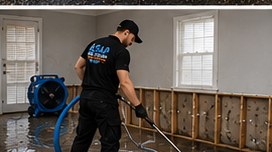
- Get the water out. Standing water should come out as soon as it's safe. Our emergency water extraction removes standing water with commercial pumps and extractors so drying can start right away.
- Remove what can't be saved. Because floodwater is contaminated, soaked carpet and pad, insulation and drywall below the waterline are usually cut out and replaced, not just dried. Keep a list of what you throw away, and a small piece of carpet, for the adjuster.
- Clean, sanitize and dry the structure. Concrete, framing and hard surfaces get cleaned and treated, then dried with commercial dehumidifiers and air movers until moisture readings are back to normal. Mold can start on wet materials in 24 to 48 hours, which is why this step can't wait.
If the water came up through floor drains or a toilet, that's a sewage problem as well as a flood. Read about sewage cleanup. For the full storm process, from the first call to final drying, see our storm and flood damage restoration page.
Flood insurance vs. homeowners: what's usually covered
This is where many Long Island homeowners get a surprise. In general:
- Rising floodwater and storm surge are usually excluded from a standard homeowners policy. They're normally covered only by a separate flood policy, through the National Flood Insurance Program (NFIP) or a private flood insurer.
- Basement coverage under NFIP flood policies is limited. It typically covers items like the furnace, water heater and electrical panel, but not finished walls, flooring or most belongings stored in the basement. Check your declarations page.
- Rain through a roof or window the storm damaged is often handled under homeowners coverage.
- Sewer and drain backup often needs a separate endorsement on the homeowners policy.
- New NFIP policies usually have a 30-day waiting period, so buying one when the storm is already in the forecast is usually too late.
Every policy is different, so read yours or call your agent. Whatever you're covered for, clear photos, a moisture log and a detailed scope of work make the claim easier. Our insurance claim assistance page explains how we document jobs for adjusters.
Storm flood help across Nassau & Suffolk
We answer 24/7 all over Long Island, including flood-prone South Shore communities like Long Beach, Freeport and Lindenhurst. If the storm left water in your basement but it came from rain and groundwater, not the bay, our guide to basement flooding after heavy rain covers that situation.
Quick answers
Does homeowners insurance cover nor'easter flooding?
Usually not for rising floodwater or storm surge. That normally takes a flood policy. Rain through storm damage is often covered. Policies vary, so check yours.
Can flooded carpet and drywall be saved?
Soaked carpet, pad, insulation and drywall below the waterline are usually replaced, because floodwater is contaminated. Concrete and solid framing can be cleaned and dried.
How soon should cleanup start?
As soon as it's safe to go in. Mold can start within 24 to 48 hours.
Is it safe to turn the power back on?
Not if water reached outlets, the panel or appliances. Have an electrician check first, especially after saltwater.
Storm water in the house? We answer 24/7.
Water extraction and drying across Nassau & Suffolk County.