
A nor'easter parks over the Island, it rains all night, and in the morning there's water on the basement floor. Maybe the sump pump never kicked on. Maybe water is seeping through a crack in the wall or coming in under a basement door. Whatever the path, the clock starts the moment the water gets in. Here's what to do first, why it happens to Long Island basements, and how to get the space truly dry instead of just "looking dry."
First: is it safe to go down there?
Water and electricity in a basement is the real danger, more than the water itself. Before you step off the stairs:
- Look for anything electrical near the water: outlets, power strips, extension cords, the boiler or furnace, the water heater, the washer and dryer, and the electrical panel. If water could be touching any of them, stay out. Turn off power at the panel only if you can reach it without walking through water. If you can't, call PSEG Long Island or an electrician to cut the power.
- If you smell gas, leave the house and call your gas utility from outside. Don't flip switches on the way out.
- Never run a gas generator or gas-powered pump inside the house, a garage or near open windows. Carbon monoxide builds up fast and you can't smell it.
- Treat floodwater from outside as dirty. Rain that ran across the yard or street picks up soil, fertilizer and sometimes sewage. Wear rubber boots and gloves, and keep kids and pets out.
The first two hours
- Find where the water is coming from. Is the sump pit overflowing? Is water entering through a wall crack, a window well, the floor-wall joint, or a basement door? Is it coming up a floor drain? (Dark, smelly water from a drain is a sewer backup, a different situation; see our sewer backup guide.)
- Check the sump pump. If it's safe, see if the pump has power and whether the float is stuck. A tripped GFCI outlet or a float jammed against the side of the pit are common causes, and both are easy to spot.
- Take photos and video of the water depth, the source and everything damaged, before you move anything. Insurance adjusters will ask for them.
- Get things off the floor. Move boxes, electronics, rugs and anything made of paper or cardboard upstairs. Put furniture legs on foil or plastic blocks so they don't wick water.
- Call for extraction and drying. Mold can start growing on wet drywall, carpet pad and wood within 24 to 48 hours. The sooner the water is out, the less has to be torn out later.
Deep water after a big storm? If there are several feet of water in the basement and the ground outside is still saturated, don't pump it all out at once. Water-logged soil pushes hard on the outside of foundation walls, and draining the inside too fast can crack or collapse them. FEMA's guidance is to pump out about one-third of the water per day and wait until floodwater outside has gone down.
Why Long Island basements flood in heavy rain
Long Island sits on sandy soil that usually drains well, which is why many homeowners are surprised when the basement takes on water. But a long, heavy storm can saturate the ground faster than it drains, and that's when problems show up.
High groundwater on the South Shore
In low-lying neighborhoods near the bays, in towns like Massapequa, Freeport and Lindenhurst, the water table is close to the surface. After heavy rain, and especially when a storm also pushes high tides into the bays, groundwater rises and pushes up through the slab and in at the floor-wall joint. A sump pump is often the main line of defense in these homes.
Surface water with nowhere to go
On both shores and in the middle of the Island, the most common cause is simpler: rainwater collecting next to the house. Clogged gutters overflow, downspouts dump water right at the foundation, the yard slopes toward the house, or window wells fill up like buckets and leak through the window.
Cracks and old foundations
Many Nassau and Suffolk homes are 60 or more years old. Small cracks in poured walls, gaps in block walls and worn seals around pipes coming through the foundation all let water in once the soil outside is soaked.
Why sump pumps fail when you need them most
- Power outage. Big storms knock out power, and a pump without power does nothing. This is the number one reason to have a battery backup or water-powered backup pump.
- Stuck or broken float switch. The float tells the pump when to run. If it gets jammed against the pit wall, debris or the pump cord, the pump never turns on.
- Pump too small or too old. A pump that keeps up with a normal rain can fall behind in a nor'easter. Pumps also wear out, and many people never test theirs.
- Blocked or frozen discharge line. If the pipe that carries water outside is clogged, crushed or frozen, the water has nowhere to go. In winter, a discharge line that drains toward the house or holds water can freeze solid.
- Tripped GFCI outlet. The pump is plugged in but the outlet has cut off, and nobody notices until the pit overflows.
Test your pump before storm season: slowly pour a bucket of water into the pit. The float should rise, the pump should start on its own, and the water should drain quickly. If it doesn't, call a plumber before the next storm, not during it.
How a flooded basement is properly dried
Getting the standing water out is only step one. Concrete, block walls, the bottom of drywall and wood framing all soak up water, and that moisture stays long after the floor looks dry. Here's what professional flooded basement cleanup involves:
- Extraction. Standing water is removed with pumps and commercial extraction equipment, including water trapped in carpet.
- Moisture mapping. Meters and thermal cameras show how far the water wicked up the walls and under flooring, so nothing hidden gets missed.
- Remove what can't be saved. Carpet pad, soaked insulation and drywall that wicked up water are usually cut out. Because outside floodwater is often contaminated, more porous material may need to go than with a clean pipe leak.
- Clean and treat. Hard surfaces are cleaned and treated with an antimicrobial to slow mold growth.
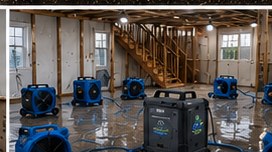
- Structural drying. Air movers and dehumidifiers run until readings in the walls, framing and slab are back to normal. That's the point of structural drying: you measure dry, you don't guess it.
If water came in from storm surge or flooding across a whole neighborhood, see our storm and flood damage service as well.
Insurance: what to know before you call
Coverage for a wet basement depends on where the water came from, and policies vary a lot. In general, many standard homeowners policies exclude flood and surface water. Water from a failed or overwhelmed sump pump is often covered only if you have a water backup endorsement (sometimes called a sump pump rider). Separate flood insurance covers only limited items in a basement. None of this is a promise either way: read your policy or call your agent. Good photos, a list of damaged items and moisture readings help any claim, and our insurance claim assistance page explains how we document the job for your adjuster.
How to keep the next storm out
- Clean gutters after the leaves drop and extend downspouts several feet away from the foundation.
- Check the grading so soil slopes away from the house, not toward it.
- Cover window wells and keep their drains clear.
- Add a battery backup sump pump and a high-water alarm that you'll hear from upstairs.
- Make sure the discharge line carries water well away from the house and can't freeze or clog.
- Store things on shelves or in plastic bins, not cardboard boxes on the floor.
- Ask your agent whether you have water backup coverage, and how much.
Quick answers
How fast do I need to dry a flooded basement?
The same day if possible. Mold can start in 24 to 48 hours on wet drywall, carpet pad and wood.
Can I just use a wet vac and fans?
For a thin film of water on bare concrete, maybe. If carpet, drywall or framing got wet, household fans won't dry the inside of walls or the slab.
Is it safe to walk into a flooded basement?
Not if water could be touching outlets, cords, the furnace, the water heater or the panel. Get the power shut off first. If you smell gas, leave and call the gas utility from outside.
Does insurance cover a basement flooded by rain?
It depends on the cause and your policy. Sump pump failures often need a water backup endorsement, and flood and surface water are often excluded. Check with your agent.
Water in the basement? We answer 24/7.
Live dispatch to homes across Nassau & Suffolk County.