
Dark water rising out of the basement floor drain, a toilet that gurgles when the washer drains, a smell you can't miss: that's a sewage backup, and it is not the same as a clean-water leak. Sewage carries bacteria and viruses, it soaks into anything porous, and every time someone upstairs flushes or showers, more of it can come up. Here is what to do in the first hour, why it happens in Long Island homes, and what a safe cleanup really involves.
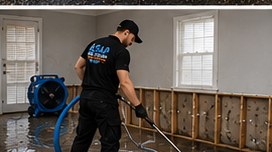
The first hour: what to do right now
- Stop using the water. No flushing, no showers, no dishwasher, no laundry. All of that water goes down the same drain line, and if the line is blocked it comes back up at the lowest opening, which is usually the basement floor drain or a basement toilet. Tell everyone in the house.
- Keep people and pets out. Especially young children, anyone pregnant, older adults and anyone with a weakened immune system.
- Be careful with electricity. If water is near outlets, a boiler, a water heater or the electrical panel, turn the power off to that area only if you can reach the panel without stepping into water. If you can't, stay out and call your utility or an electrician.
- Turn off the furnace or central air fan if its return vents or ductwork are in the flooded basement, so you are not blowing odor and contaminated air through the house.
- Take photos and video of the drain, the water line on the walls and everything that got wet before you move anything. Your insurance company will ask for them.
- Call for help. If neighbors on your street are backing up too, call your town or sewer district first, because the blockage may be in the public main. Then call a sewage cleanup crew to remove the water and contaminated materials.
Don't do this: don't use a household shop-vac or carpet cleaner on sewage (it spreads contamination and can ruin the machine), don't track through the water with bare feet or sneakers, and never mix bleach with ammonia or other cleaners, since that gives off toxic gas.
Why sewage backs up in Long Island homes
Where you live on the Island changes the likely cause. Most of Nassau County is on public sewers, while most homes in Suffolk County are not connected to a sewer and use a cesspool or septic system. The water coming up the drain looks the same, but the fix is different.
Homes on a public sewer
- A clog in your lateral. The lateral is the pipe that runs from your house to the street main. In older neighborhoods it may be clay or cast iron, and tree roots find their way into the joints. Grease and "flushable" wipes finish the job.
- A blockage in the street main. When the main backs up, sewage looks for the lowest opening on the street, and a basement drain is often it. This is why several homes on one block can back up at once.
- Heavy rain. During big storms, water can get into sewer lines through cracked pipes and loose manhole covers, and the lines can't keep up.
Homes on a cesspool or septic system
- A full or failing cesspool. Cesspools need pumping, and older ones can stop draining as the soil around them clogs. Warning signs are slow drains all over the house, gurgling, and a sewage smell or soggy ground over the cesspool.
- A blocked line between the house and the tank. Roots and wipes cause the same problems here as on a sewer line.
- A high water table after storms. In low-lying South Shore areas, saturated ground can slow how fast a cesspool drains.
If you are on a cesspool and it is backing up, call a licensed cesspool service to pump it before you run any water again. Cleanup inside the house and the fix outside need to happen together.
Who pays: you, the town, or insurance?
In most Long Island sewer districts the lateral is the homeowner's responsibility and the street main belongs to the town or district. Rules vary by town, village and district, so if you suspect the main, report it right away and ask for a reference number.
Insurance is where many people get surprised. Many standard homeowners policies exclude water that backs up through a sewer or drain unless you added a sewer or water backup endorsement (also called a rider). Flood insurance generally covers backup only when a flood directly causes it. Every policy is different, so read yours or call your agent before assuming anything. What helps any claim: photos from the start, a written list of damaged items, moisture readings and a clear scope of work. Our insurance claim assistance page explains how we document a job for your adjuster.
What safe sewage cleanup looks like
The restoration industry's water damage standard (IICRC S500) treats sewage as Category 3, or "black water," the most contaminated kind. That changes the job compared to a clean-water leak:
- Protective gear and containment. The crew works in gloves, boots, eye protection and respirators, and seals off the area so contamination isn't carried through the house.
- Extraction first. Standing sewage is pumped and extracted with truck-mounted or portable equipment, not mopped around.
- Remove what can't be saved. Carpet and pad, drywall and insulation that the water touched, and most upholstered furniture are porous. They can't be reliably disinfected, so they are cut out and bagged. Drywall is usually cut a safe distance above the water line.
- Clean and disinfect hard surfaces. Concrete, tile, sealed wood and framing are cleaned, then treated with an antimicrobial.
- Dry the structure. Air movers and dehumidifiers run until moisture readings in the framing and slab are back to normal. Mold can start growing in 24 to 48 hours on wet materials, so drying can't wait for the weekend.
- Deal with the odor. Once the source is gone and the area is dry, any lingering smell is treated at the source instead of being covered up.
We handle all of this as part of our sewage backup cleanup service, starting with emergency water extraction, and when the backup came with clean water from a storm or sump failure too, our flooded basement cleanup team dries the rest of the space. We serve all of Nassau and Suffolk, including South Shore towns like Lindenhurst and Lynbrook.
How to keep it from happening again
- Ask a licensed plumber about a backwater valve. It lets sewage flow out but closes when it tries to come back in. It may need a permit, so let the plumber handle it.
- Get a camera inspection of your lateral if you have had backups before, have big trees near the line, or own an older home.
- Only flush toilet paper. "Flushable" wipes, paper towels and feminine products don't break down like toilet paper.
- Keep grease out of the sink. Let it cool, put it in a can and throw it in the trash.
- Pump your cesspool on schedule and have it inspected if drains are getting slow.
- Check your insurance now and ask your agent whether you have sewer and drain backup coverage, and how much.
Winter brings its own basement risks. If you haven't yet, read our guide on how to prevent frozen and burst pipes on Long Island.
Quick answers
Is it safe to clean up a sewer backup myself?
A very small spill on a bare concrete floor, caught right away, can be cleaned with gloves, boots and disinfectant. If sewage soaked carpet, drywall or furniture, or covers more than a small area, have a trained crew do it.
Can I keep my carpet?
Usually not. Carpet and pad soaked by sewage can't be reliably disinfected and should be removed. Hard surfaces can usually be cleaned.
Does homeowners insurance cover it?
Only if your policy includes sewer or drain backup coverage, in most cases. Policies vary, so check with your agent.
Is it my problem or the town's?
In most districts the lateral is yours and the main is theirs. If neighbors are backing up too, call the town or sewer district right away.
Sewage in the basement? We answer 24/7.
Live dispatch to homes across Nassau & Suffolk County.