
The leak is fixed, the puddle is gone and the floor feels dry. Then, a week or two later, the room starts to smell musty. That is the most common way mold shows up after water damage: not during the emergency, but after everyone thinks it's over. Mold doesn't need a flood. It needs moisture that stayed in a material long enough. Here is how fast that happens, the signs to look for, what you can handle yourself, and when it's time for professional remediation.
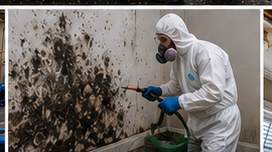
How fast mold grows after a leak or flood
Mold spores are already in every home; they float in with outdoor air. They stay harmless until they land on something that is wet and has food in it. Unfortunately, most of a house is food: the paper facing on drywall, wood framing and subfloors, carpet backing, cardboard boxes, even household dust.
Once those materials stay wet, mold can begin to grow within 24 to 48 hours. Within days it can spread across the back of drywall or the underside of carpet where you can't see it. That is why the clock in water damage is not about the water you can see. It's about how long the hidden moisture stays in the walls, floors and ceiling.
Why Long Island homes are especially prone
- Humid summers. Warm, moist air off the Sound and the ocean slows natural drying. A wet basement in August can stay wet for weeks on its own.
- Finished basements. Drywall, carpet and paneling below grade sit against cool foundation walls where moisture collects, and water hides behind them easily.
- Coastal and low-lying neighborhoods. South Shore and waterfront homes deal with storm and tidal flooding, and flood water carries far more contamination than a clean pipe leak.
- Older homes with additions. Bump-outs, crawl spaces and converted garages often have poor ventilation, so moisture from a small leak lingers.
Warning signs mold is growing after water damage
- A musty, earthy smell that gets stronger when the heat or AC turns on, or when a closet or cabinet is opened.
- Spots or stains — black, green, gray, white or even orange — on drywall, ceilings, baseboards or the back of furniture.
- Bubbling or peeling paint, soft or swollen baseboards, and drywall that crumbles at the bottom.
- Cupping or buckling wood floors, a sign moisture is still trapped underneath.
- Allergy-like symptoms indoors — stuffy nose, itchy eyes, coughing or worse asthma — that ease up when you leave the house.
Don't judge by color. "Black mold" gets a lot of attention, but you can't tell the type or the risk just by looking. Any mold growing indoors after water damage should be dealt with, along with the moisture that caused it.
Health note: Mold can trigger allergies and asthma attacks, and people with weakened immune systems, infants and older adults are more sensitive. If someone in the home has a health condition, keep them out of the affected area and talk to their doctor.
The best mold treatment is fast drying
Almost every mold problem after a leak comes back to one thing: the water wasn't fully removed and the structure wasn't fully dried. A box fan and an open window dry the surface. They don't dry the inside of a wall cavity, the wood under the carpet pad, or insulation above a ceiling.
Proper drying starts with emergency water extraction, then finding every wet area with moisture meters and thermal imaging, then running commercial air movers and dehumidifiers for structural drying while readings are checked daily until the materials are back to normal. If that happens in the first day or two, mold usually never gets a chance to start.
If your basement took on water recently, our guide on what to do after a basement floods in heavy rain walks through the first steps.
What you can safely clean yourself
A small patch of mold on a hard, non-porous surface — tile, a sink, a window frame, sealed concrete — can usually be handled by a homeowner if the area is small (the EPA's rule of thumb is well under about 10 square feet) and the moisture source is fixed:
- Wear gloves, goggles and an N95 mask. Keep kids and pets away.
- Scrub with detergent and water, then dry the surface completely.
- Throw away the rags or sponges in a sealed bag.
- Watch the spot for a few weeks. If it comes back, there is still a moisture problem.
What not to do
- Don't rely on bleach for drywall, wood or carpet. It doesn't reach mold growing below the surface and adds more water to the material.
- Never mix bleach with ammonia or other cleaners. It creates toxic gas.
- Don't paint over mold. It keeps growing under the paint.
- Don't dry-brush, sand or vacuum mold with a regular vacuum. That spreads spores through the house.
- Don't run central heat or AC if you suspect mold near the ducts or air handler, until it's checked.
When you need professional mold remediation
- The growth covers more than about 10 square feet, or keeps coming back.
- It's on porous materials: drywall, ceiling tiles, insulation, carpet and pad, wood framing.
- You smell mold but can't see it — it may be inside a wall, under flooring or in the HVAC system.
- The water was sewage or outside flood water. Contaminated water means porous materials it touched usually have to be removed, not cleaned.
- Someone in the home has asthma, allergies or a weakened immune system.
Professional mold remediation means setting up containment with plastic barriers and negative air pressure so spores don't travel, HEPA filtration, removing moldy porous materials, cleaning and treating the framing, drying, and then confirming the area is clear before rebuilding. Lingering musty smells can be handled with professional odor removal once the source is gone.
New York's mold law in plain English
New York State has its own mold law (Article 32 of the Labor Law). For most mold projects larger than 10 square feet, it requires a licensed mold assessor to inspect and write the plan, and a separate licensed mold remediation contractor to do the work — the same company can't do both on one project. Homeowners working on their own home are generally exempt, but if you're hiring someone, ask about licensing.
We help homeowners across Nassau and Suffolk, from Long Beach and Huntington out to Greenport on the North Fork.
Does insurance cover mold after water damage?
It depends on your policy and on the cause. Some homeowners policies cover mold that results from a sudden, covered water event like a burst pipe, sometimes with a separate dollar limit. Mold from a slow, long-term leak, high humidity or flooding (which needs separate flood insurance) is often excluded. Every policy is different, so read yours or call your agent. Acting fast and documenting everything — photos, the date of the leak, moisture readings — helps in every case.
Quick answers
How fast does mold grow after water damage?
On wet drywall, wood, carpet pad and cardboard, it can start within 24 to 48 hours.
Can I clean mold myself?
A small spot on a hard surface, yes, with gloves and an N95 mask. Large areas, hidden mold, porous materials or mold after sewage or flood water need a professional.
Does bleach kill mold on drywall?
Not reliably. Moldy drywall usually needs to be cut out and replaced after the moisture is fixed.
How do I keep mold from coming back?
Fix the water source, dry everything completely, and keep indoor humidity below 60% (ideally 30–50%) with a dehumidifier in basements.
Leak, flood or musty smell? We answer 24/7.
Fast drying and mold remediation across Nassau & Suffolk County.