
A brown ring on the ceiling is easy to ignore. It's dry, it's small, and it doesn't seem to be getting worse. But a ceiling stain is the end of a leak, not the start of it. By the time water shows through the paint, it has already soaked the insulation, the joists or the subfloor above. The good news: the stain itself tells you a lot about where the water is coming from and how urgent it is. Here's how to read it.
First: is this an emergency?
Look up and check for these signs. If you see any of them, treat it as active water damage today, not a weekend paint job:
- The stain is wet to the touch, or it's bigger than it was yesterday.
- Water is dripping from the ceiling, a light fixture or a smoke detector.
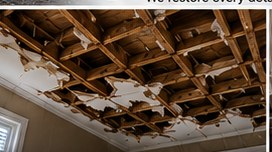
- The ceiling is sagging, bulging or cracking in a bowl shape.
- Paint is bubbling or the drywall feels soft when pressed gently.
- There's a musty smell in the room or from the floor above.
A dry, faded stain that hasn't changed in months is usually an old leak. It still needs a source check, but you have time to do it right.
Sagging ceiling? Stay safe. A bulge means water is pooling on top of the drywall or plaster, and it can come down all at once. Keep people and pets out from under it, move furniture and electronics away, and turn off the breaker for any light or fan in that ceiling. Never touch a wet fixture. If the bulge is small, you can put a bucket under it and make a small hole at the lowest point with a screwdriver to let the water drain in a controlled way, standing to the side. If it's large or cracking, don't touch it — keep the room closed and call for help.
How to read a ceiling water stain
Where the stain is and when it shows up are your best clues.
Under a bathroom
This is the most common cause we see in two-story homes. Stains below a bathroom usually come from a failed wax ring under the toilet, a leaking tub or shower drain, cracked grout or worn caulk around the tub, or a supply line to the sink or toilet. A simple test: if the stain gets darker after someone showers but not when nobody uses the bathroom, the leak is likely in the drain, the shower pan or the tile and caulk — not the pressurized supply pipes.
Near an outside wall or at the corner of the room
This points to the roof or the walls: worn flashing around a chimney, skylight or vent pipe, a damaged shingle, a clogged gutter overflowing behind the fascia, or wind-driven rain getting in around a window above. If the stain only grows after storms, especially nor'easters with strong wind, think roof and exterior first.
Along the edge of the ceiling in winter
When snow sits on the roof and warm air escapes into the attic, the snow melts, runs down and refreezes at the cold eaves. That ridge of ice is an ice dam, and water backs up behind it and under the shingles. Ice dam stains typically show up along exterior walls a day or two after snow, often with no visible roof damage at all. Better attic insulation and ventilation are the long-term fix.
In the middle of a top-floor ceiling, after summer
Many Long Island homes have central air handlers in the attic. They make condensation all summer, and if the drain line clogs or the drain pan rusts through, water drips onto the ceiling below. These stains often appear in late summer or early fall and stop when the AC is off — which is why they're easy to forget until next June.
Below a kitchen or laundry room
Look at the dishwasher, the refrigerator ice-maker line, the washing machine hoses and the water heater. We cover those in detail in our guide to appliance leak water damage.
In a condo or apartment
If someone lives above you, the leak may be in their unit. Tell building management or the super right away, take dated photos, and get it in writing. Who pays depends on where the leak started and on the building's rules and insurance.
Why "just paint it" usually backfires
Painting over a stain before the source is fixed and the area is dry hides the problem but doesn't stop it. Wet insulation above the ceiling can stay damp for weeks, and mold can start on wet drywall paper, wood and insulation within 24 to 48 hours. Regular paint also lets the brown stain bleed back through.
The right order is always: stop the water → confirm it's dry → repair → seal → paint. "Dry" means checked with a moisture meter, not "it feels dry." Our thermal imaging and moisture detection shows how far the water actually traveled across the ceiling and into the joists — it's often much wider than the stain you can see. Once everything reads dry, a stain-blocking primer goes on before the finish coat.
Dry it or replace it?
Not every wet ceiling has to be torn down. Here's how professionals usually decide:
- Can often be dried in place: drywall that got wet with clean water, is still flat and firm, and is dried quickly with air movers and dehumidifiers.
- Usually removed: drywall that is sagging, crumbling or has lost its shape; anything soaked for days; and anything wet by toilet overflow or other contaminated water, which is treated as a health risk.
- Insulation: soaked loose-fill cellulose clumps and holds water and is normally removed. Wet fiberglass batts often lose their loft and are commonly replaced.
- Plaster ceilings in older homes are heavy. When water weakens the bond to the wood lath, plaster can drop in large pieces, so a wet or bulging plaster ceiling needs a careful look before anyone works under it.
When we handle a ceiling leak, we open only what's needed, dry the cavity with commercial structural drying, log the readings until they're back to normal, and then complete the drywall repair and repainting. If you find dark spots or a musty smell, read our guide on mold after water damage.
What to do right now, step by step
- Find the source and stop it. Turn off the supply valve to a leaking fixture, or the main water valve if you can't tell. For a roof leak, catch the water in the attic with a bucket or tarp if you can reach it safely.
- Make it safe. Breaker off for fixtures in a wet ceiling; keep everyone away from a sagging area.
- Protect your things. Move furniture, rugs and electronics out of the drip zone.
- Take photos and video of the stain, the source and anything damaged, with the date. Your insurer will ask.
- Get it measured and dried. Call a water damage team to check moisture above and around the stain and start drying the same day.
We help homeowners all over Nassau and Suffolk, from Massapequa to Selden and beyond.
Will insurance pay for a ceiling leak?
It depends on your policy and what caused the leak. Many homeowners policies cover sudden and accidental water damage, like a supply line that bursts. Damage from a slow leak that went on for months, long-term seepage, or an old, worn-out roof is often excluded or limited. Ice dam damage is treated differently from policy to policy. In condos, your unit policy and the association's master policy may split the costs. Every policy is different, so read yours or call your agent. Clear photos, a written moisture log and a detailed scope all help, and our insurance claim assistance page explains how we document jobs for adjusters.
Quick answers
Is a water stain on the ceiling an emergency?
An old, dry, unchanging stain isn't. A wet, spreading, dripping or sagging ceiling is — deal with it today.
Can I just paint over it?
Only after the leak is fixed and everything is confirmed dry with a moisture meter. Seal it with stain-blocking primer first.
Can wet ceiling drywall be saved?
Often, if it was clean water, it's still flat and firm, and it's dried fast. Sagging or contaminated drywall is replaced.
Why is there a stain but no leak when I check?
Many leaks only run at certain times: during showers, after wind-driven rain, when snow melts, or when the AC is running. Note when the stain changes — that timing usually points to the source.
Wet or sagging ceiling? We answer 24/7.
Fast leak checks and drying across Nassau & Suffolk County.